What if the next time your child hit a wall, they didn’t crumble or complain or give up in frustration? What if they took a deep breath, tried again, and figured it out, not because someone told them to, but because they believed they could?
That’s the magic of a growth mindset. And while it might sound like a buzzword from a TED Talk or a parenting podcast, it’s actually one of the most practical and powerful mindsets you can help your child develop.
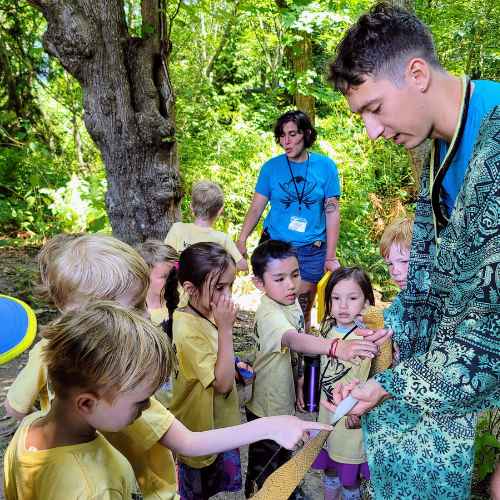
At Kong Academy, we don’t teach growth mindset by handing kids a worksheet with inspirational quotes. We build it through experience. Through mud. Through challenge and through games where they climb imaginary volcanoes or outsmart goblin kings. Because that’s how kids learn… by doing.
7 Key Qualities That Help Kids Build A Growth Mindset
So let’s take a closer look at some of the qualities of a growth mindset, and how you can nurture them through real-life (and totally fun) experiences at home, at camp, after school, or even on YouTube.
1. Embracing challenges: nothing worth doing is easy
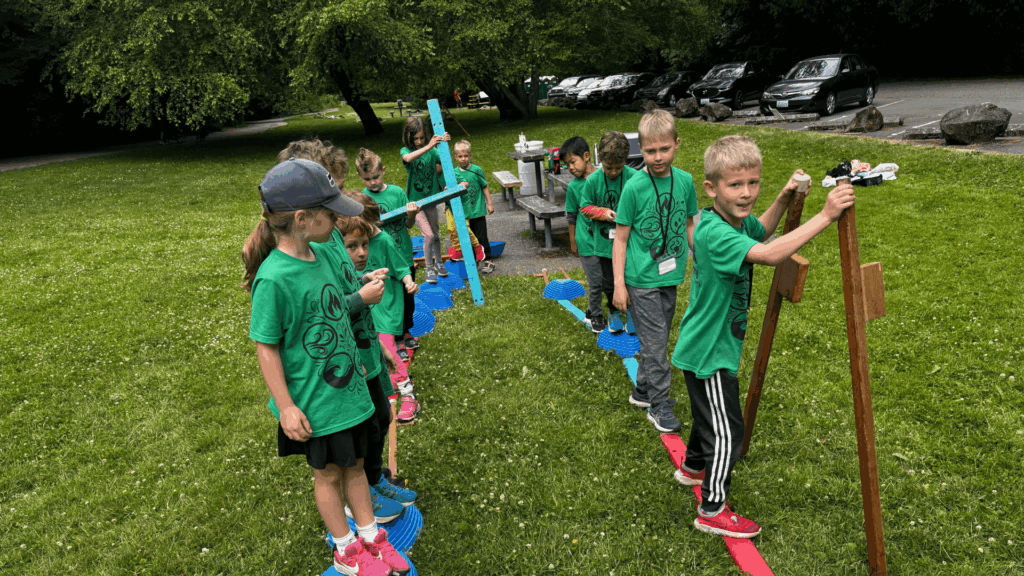
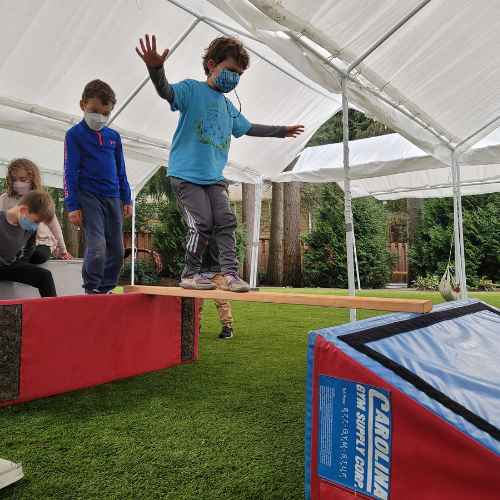
Kids with a growth mindset learn that challenge doesn’t mean something’s wrong, it means something is working. At Kong, we create physical challenges that feel like play, but stretch kids emotionally and mentally too. Maybe it’s reaching the top of a jungle vine, maybe it’s figuring out how to cross the lava floor without touching the ground. Either way, they learn to push through the hard parts, not avoid them.
And at home? Try letting your child struggle a little before stepping in. Cheer them on, but resist the urge to rescue them. Confidence grows through effort, not shortcuts. And when they get through it, you can almost see that inner lightbulb flicker on.
2. Persistence through setbacks: try, try again
Nobody likes to lose. But the difference between a fixed mindset and a growth mindset is what happens next. Do they pout, quit, and blame the rules, or do they dust off, regroup, and give it another go?
Our games build in natural failure points to help them practice recovering. When the tower falls, the game resets. When the team loses, the round starts over. It’s just part of the rhythm, and kids start to see failure not as a dead end, but as a step forward.
It’s a muscle, really. The more chances they have to try again, the more automatic persistence becomes. And that habit of trying again without being told, is what helps them keep going when school, relationships, or life throws curveballs.
3. Effort = mastery: the real win is practice
If you’ve ever watched your child play a video game for hours, trying again and again to beat a level, then you already know they understand this, at least when it’s on their terms.
That’s the trick: making practice feel purposeful. Our programs use storytelling, mystery, movement, and imagination to keep kids invested. They want to improve because they care about the game. And every time they make a new jump or solve a tougher riddle, their brain registers that effort actually works. That mastery doesn’t come from talent alone, it comes from trying.
And when effort pays off, kids feel it in their bones. Not just “I did it” but “I worked for this.”
4. Learning from feedback: criticism isn’t the enemy
This one can be tricky, especially for sensitive kids. Hearing that they need to fix something can feel personal. But when feedback is delivered inside a game, say, “Try using your shield this time!” or “What if you ask your teammate first?” It feels more like a clue to level up than a scolding.
We build feedback into the rhythm of play, so kids practice receiving it often and in different ways. They learn to see it not as judgment, but as part of how you grow. That skill transfers directly to the classroom, the playground, and life.
It’s also worth noting that feedback works both ways. At Kong, we encourage kids to offer kind, constructive ideas to teammates, which builds trust and leadership. Imagine doing that with siblings?
5. Inspired by others’ success: turning jealousy into motivation
We don’t want kids to compare themselves to others. But we do want them to learn from each other. When one child makes it across the obstacle course first, the others watch and learn. When someone solves a problem in a creative way, everyone benefits.
In our group settings, success becomes contagious. Kids get curious. They ask questions, they try new strategies, and slowly, the idea that someone else being good at something isn’t a threat, it’s an invitation.
And when kids are encouraged to cheer one another on, they begin to internalize something important: other people’s wins don’t mean they’ve lost. There’s room for everyone to grow.
6. Self-awareness: noticing what you feel & what to do about it
Before kids can change their response, they have to see their response. That means tuning into their feelings, their reactions, their inner voice. At Kong, this shows up when a child stops mid-game and says, “I’m getting frustrated,” or “I need a break.” That’s not quitting, that’s growth.
Self-awareness has to be practiced in real time, in safe spaces, with trusted adults and peers who are also learning. Not on a piece of paper or in a book. That’s why we build it into every game, every team, and every adventure. The goal is noticing, naming, and responding with care. And yes, kids can learn to do that; we’ve seen it happen hundreds of times.
7. Decision-making and responsibility: every choice matters
Whether it’s picking a teammate, solving a puzzle, or deciding whether to run or hide from the zombie hoard, kids at Kong are constantly making decisions. And then they get to see the results of those choices play out, immediately.
This kind of real-time cause-and-effect teaches kids to think ahead. To slow down, to consider consequences. Not because someone lectured them about it, but because they lived it through play, and when they mess up, they still get to try again. That’s the heart of a growth mindset. You can mess up, and still move forward.
Why These Experiences Matter More Than You Think
We know these skills don’t just develop in a vacuum. Kids need repetition, community, guidance, and fun. That’s why our after school programs and summer camps are designed to nurture a growth mindset from every angle with adventure, movement, problem-solving, and plenty of chances to start over.
Whether your child is diving into an underwater mystery, training like a jungle ninja, or playing parkour on the moon from your living room, Kong Academy gives them something deeper than just fun. It gives them experience and experience is where the growth mindset lives.
So if you’re looking for more than just childcare, if you’re looking for the kind of place where your child gets to be a child while learning real-life skills that stick, come see what we’re all about.
Want to see how it all works? Check out our YouTube channel for movement-based adventures your kids can do from home. Or sign up for our summer camps and after school programs to bring the magic to real life. Because every child deserves to feel capable, to feel strong, and to grow.

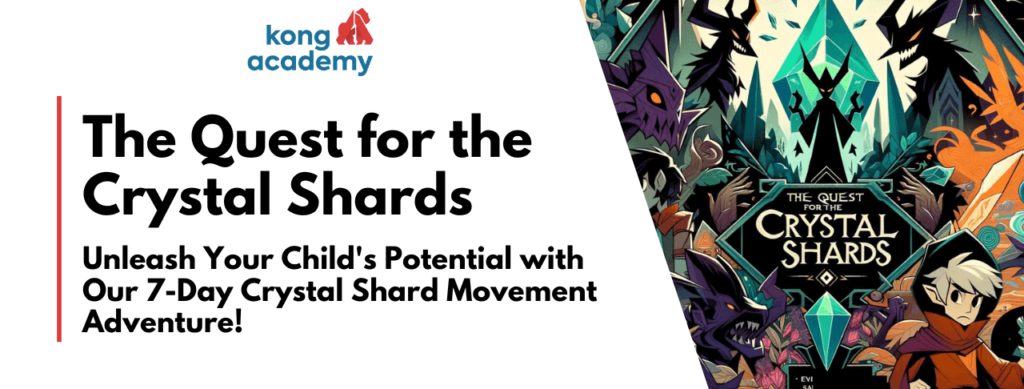
7-Day Crystal Shard Adventure
Unleash your child’s potential with our 7-day crystal shard movement adventure!