Kids are natural adventurers, full of curiosity and boldness, often ready to test their limits and explore new things one minute, jumping off the couch in a superhero cape or hanging off the monkey bars 10′ off the ground, and terrified the next because there’s a shadow on the wall that “looked like a snake”? Fear is funny like that. It’s not just monsters under the bed, sometimes it’s trying a new sport, talking to a teacher, or going to a sleepover.
And as parents, watching our kids wrestle with those big feelings can make us a little anxious too. We want to help, but how do you teach bravery without pushing too hard? And how do you raise a confident kid without pretending fear doesn’t exist?
At Kong Academy, we believe kids don’t need to be protected from fear, they need to learn how to move through it. Movement is the key word here. As kids climb, run, balance, and play, they build physical strength while also discovering how to face challenges and develop emotional resilience with every move.
Below are kid-friendly strategies to help your child face fear, manage anxiety, and grow braver every day, both at home and through the kind of play and adventure that fills our after-school programs and summer camps.
Facing Fear Through Play
When it comes to managing fear, play is one of the most powerful tools kids have. Through playful challenges and imaginative games, children can explore uncertainty in a way that feels fun, safe, and empowering.
Here are 9 ways play helps kids face fear and overcome anxiety:
1. Turn fear into a game
Anxiety shrinks when play enters the room. Games like Pirate Adventure Run or Alien Invasion Brain Break from Kong Academy’s YouTube channel create safe ways for kids to experience risk, quick decision-making, and self-regulation while having fun. They get to “feel” fear in a low-stakes way, and then conquer it.
At Kong, this kind of physical storytelling shows kids that every mistake is simply part of learning and play, helping them see challenges as opportunities to grow. When a child “falls in the lava,” they don’t give up—they try again. That repetition builds courage faster than any pep talk.
2. Use movement to calm the mind
When a child’s nervous system is flooded, logic won’t help, but movement will. Jumping, stretching, balancing, or even pretending to dodge invisible obstacles gives their brain the sensory input it needs to reset.
We see this daily in our parkour-style lessons. The moment kids move their bodies, their breathing steadies and their confidence grows. It’s one of the easiest ways to help kids transform “I can’t” into “Watch this!”
3. Name the fear, then shrink it
Kids can’t control what they can’t name. Encourage them to describe their fear: Is it a nervous feeling in your belly? A thought that something bad might happen? Naming helps the brain switch from panic to problem-solving.
And once the fear has a name, they can get creative with how they process it by drawing it, making up a funny voice for it, or inventing a superhero alter-ego that defeats it. When fear becomes part of the story instead of the villain, it loses power.
4. Celebrate “try again” moments
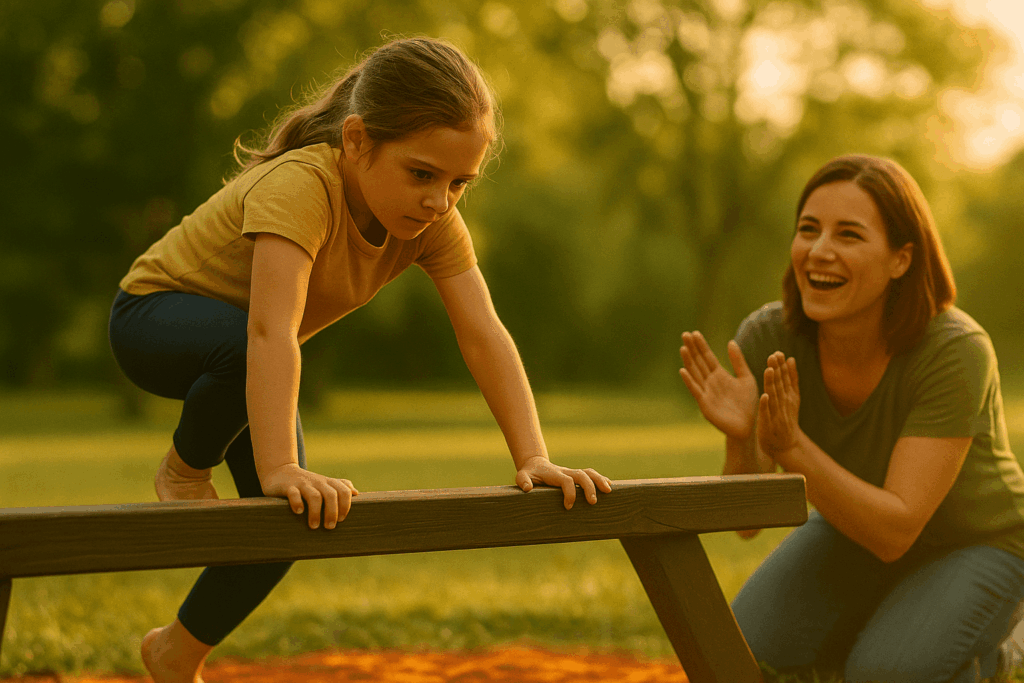
Courage doesn’t always look big and make a lot of noise. Sometimes it’s the quiet moment a child climbs back up after falling off the balance beam or raises their hand after giving the wrong answer in class yesterday. At Kong, we call these try-again victories and we celebrate them all.
These small wins create a loop of confidence: fear leads to effort, and effort lends itself to, and success is the route to bravery, and bravery feels pretty awesome. The more times a child cycles through that loop, the easier it becomes to face the next big thing.
5. Model calm under pressure
Kids read our nervous systems like open books. When we gasp, over-reassure, or rush to fix their fear (or when something suddenly startles us) they sense it right away. Instead of reacting, try modeling calm by taking a deep breath yourself. Show them how to slow down and steady their bodies, even when something feels uncertain. If your child is facing a physical test like jumping off a boulder or climbing higher than usual, stay nearby, breathe with them, and say, “Let’s figure this out together.”
That calm presence tells their body: You’re safe, even when things feel scary. It’s the same trust we build between our coaches and kids because courage grows best in safe relationships.
6. Teach healthy risk-taking
From climbing trees to joining new clubs, taking healthy risks is how kids learn that discomfort can lead to discovery. We design our games to push that edge carefully just high enough to challenge, safe enough to succeed.
A little wobble on a balance beam or a tricky jump in parkour teaches far more than “don’t be scared,” it teaches, I can do hard things. That’s the foundation of every growth mindset.
7. Build bravery through belonging
Anxiety fades when kids feel connected. In our groups, courage spreads like laughter especially when one child tries something new and the others follow. That’s why every Kong group program weaves friendship and teamwork into the fun.
At home, you can do the same. Let siblings or friends cheer each other on during challenges, making shared victories turn fear into excitement and making room for bravery to be contagious.
8. Keep fear in perspective
Kids don’t always need fear to disappear but they do need to learn how to manage it and keep it in balance. A little fear is what helps them look both ways before crossing the street or double-checking their science project before they turn it in. What matters is teaching the difference between fear that protects and the kind of fear that blocks you.
At Kong, we talk about “useful fear.” Useful fear is the kind of fear that acts like a teammate, not an enemy. When kids understand that fear is on their side, needed to keep them alert, aware, and safe, not to keep them small, they begin to trust themselves more.
9. Practice confidence daily
Confidence grows through practice and experience like a muscle that strengthens through practice. Whether it’s balancing, climbing, or solving clues in one of our adventure games, each challenge rewires their brain for persistence and courage.
At home, keep that momentum going. Ask, “What felt tricky today? What did you do about it?” Talking about small fears helps kids build the language and resilience for the bigger ones. It helps them normalize the everyday stressors that can fuel anxiety while finding ways to manage themselves in difficult times.
When Fear Turns into Growth
Facing fear begins with nurturing a child’s natural bravery and helping kids realize they already have it inside them. Every tumble, every sweaty-palmed “I don’t want to,” and every try-again moment grows their courage from the inside out.
When we give kids the tools to move, play, and connect, they stop seeing fear as something to run from and start seeing it as something they can move through. That’s the kind of strength that lasts far beyond childhood.
Ready To Help Your Child Face Fear & Overcome Anxiety?
Join Kong Academy’s Kids Club, our free, fun program full of simple activities you can use at home to help your child build confidence and courage through play. Sign up for Kids Club and start raising a braver, stronger, happier kid today.



7-Day Crystal Shard Adventure
Unleash your child’s potential with our 7-day crystal shard movement adventure!